By: Jack Tessier
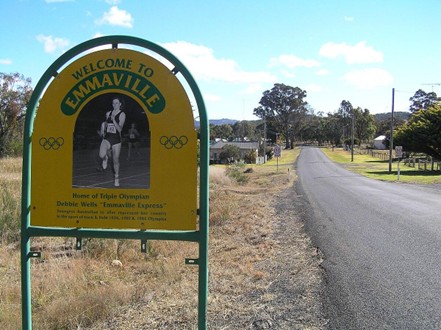
The story of Australian Big Cats has been circulating the Australian media for a very long time; this includes legends like the Tantanoola Tiger. From stories of escaped circus animals to the release of World War 2 mascots to speculation that the Marsupial Lion survived extinction. Let’s take a little deep dive into the local urban legend of the Emmaville Panther in the New England area of New South Wales in Australia.
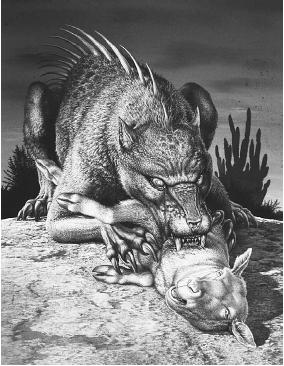
In Australia there have been multiple eyewitness accounts of Big Cats around Australia with believers of what they could be or where they come from, ranging from Panthers i.e.(Jaguars or perhaps Leopards) with some claiming they could have been escaped circus animals or released pets during World War 2. Others say they could be the long extinct Marsupial Lion (Thylacoleo carnifex). But commonly many believe that they are feral cats on the loose in Australia, this has caused widespread debate across the nation especially in regard to photos and videos.
I would like to begin by saying that these articles I write are not intended to be a preference on my own beliefs, I continue to try and remain impartial to both a skeptical or rational side and an open-minded side as well.
On June 26, 1958, as written by the Canberra Times. “An offer by Edward Hallstorm of a $1,000 reward for the black animal roaming the northern tablelands has started many “safaris” to hunt for the animal around the countryside of Glen Innes. Sir Edward Hallstorm, who is chair of the Taronga Park Trust has offered $1,000 for the animal dead or alive. The $1,000 will be paid only if the animal proves to be a rare Australian black Marsupial Cat. If it should be an Indian black Panther, he will give $500. Reports of sightings of the animals come from Glen Innes, Tenterfield and Tamworth. Many people in the area believe the animal is a Black Panther, and that it escaped from a circus at Emmaville several years ago. An old coat, clawed to pieces has been found. One man said the beast is about 6 feet long and 2 feet high. Altogether, a dozen people report seeing it.”
Written in the Canberra Times on Monday the 30th of June 1958 with the title “Farmer Reports Shooting Black Panther”, a station owner told the Emmaville Police that he had shot the Black Panther believed to be terrorizing the locals of the Glen Innes district in Northern New South Wales, he claimed that the animal was huge and he estimated the weight to be about 300 pounds. He shot the animal, then the animal ran into the bush wounded, the station owner believes that the animal wouldn’t survive more than 48 hours after that shot. The shooter referred to the animal as a bear, but the police connected it more so to the local Emmaville Panther legend.
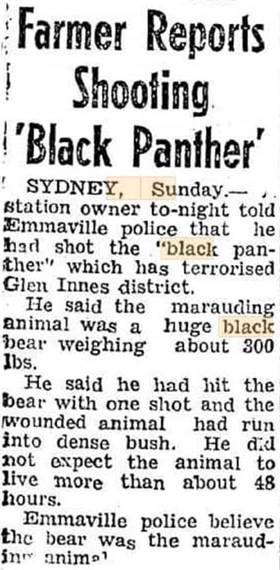
Photo Source: 30 Jun 1958 – Farmer Reports Shooting ‘Black Panther’ – Trove
Here are the perspectives written by the University of New England Zoology Associate Professor Karl Vernes and Associate Professor Guy Ballard.
Professor Karl Vernes who is experienced with Tigers in Bhutan and Jaguars in Mexico states: “Everybody seems to have their own big cat story, wherever you live in Australia.”
But furthermore, going on to state skepticism over the matter due to lack of photographic or video evidence.
“But we’ve never seen any reliable photographic evidence. Big Cats I have studied put themselves in front of the camera quite happily, but for all the thousands of camera traps scientists have out in the Australian bush we’ve never captured so much as a shadow of one.”
Associate Professor Guy Ballard through his work with Australian Wildlife through scientific research he has had encounters and seen signs of a multitude of known species in Australia, but once he may have had his own Big Cat story, although not in the New England area it’s more inland in Warrumbungle.
“It stopped me in my tracks, but when we investigated, it was definitely a Swamp Wallaby.”
Guy went on to state further “Most people report seeing the rear end of a dark animal with a thick tail loping off into the bush, and that’s just what Swamp Wallabies do.”
As Associate Professor Guy Ballard goes on to state further that people’s poor judgement can lead to misidentification. “Most people commonly overestimate the size of a feral cat, especially in the distance.” There are common misidentification suspects such as the likes of feral black cats, and pure black dingoes.
“But there’s another important issue here, the distraction from real issues of importance. We need more resources going into biosecurity monitoring of foxes, feral cats, wild dogs, pigs and rabbits, and when people devote their time to chasing big cats, those resources are diverted away from monitoring pests and a host of threatened species that are just still extant. I don’t want to stop people’s curiosity or rain on their parades, but I would throw my weight behind both biosecurity and the conservation of our magnificent native predators, like Spotted Tail-Quolls.”
Through reading these articles, I was intrigued at the thought of the Emmaville Panther being a thought to be extinct Marsupial Lion, the leading belief I’ve always heard was the idea that the Australian Military brought Panthers over as mascots, it is a safe skeptical approach nonetheless to say that what people are most likely encountering are feral cats. There are an estimate of 2.1 Million to 6.3 Million feral cats that roam the Australasian continent, I will also not that although some of these sightings can definitely paint the picture for a large animal that doesn’t belong in the Australian bush, when people believe they witnessed something unexpected or unexplained especially if they go looking for the unexplained or hear of these local urban legends they are more likely to obscure what they think they saw, ie overestimate height or weight or color among other features, although that does not specifically conclude that there isn’t a large feline or Marsupial Cat currently roaming the Northern Tablelands of New South Wales or other regions of Australia, the mystery remains inconclusive.
Sources: